
Muscle Pain Relief Guide: Causes, Home Remedies & Prevention

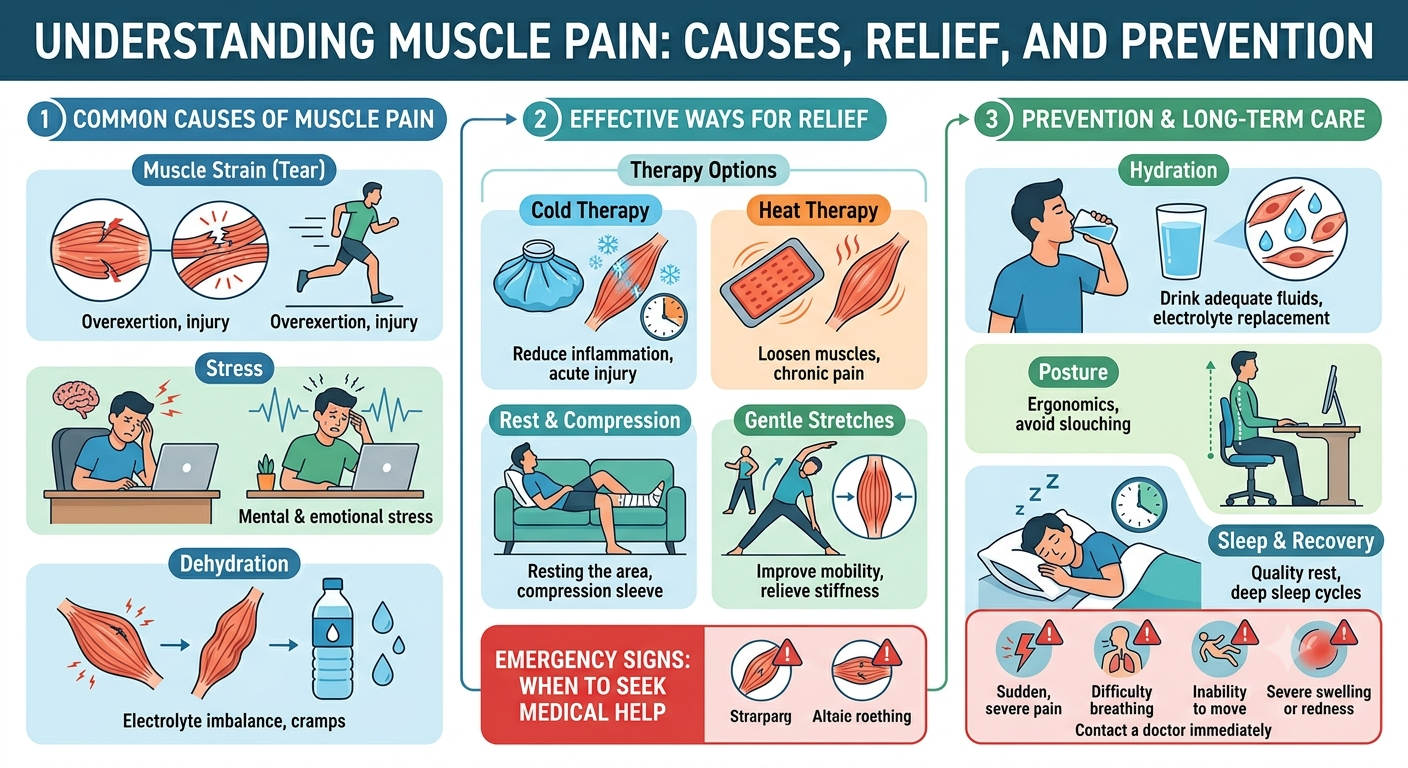
Understanding Muscle Pain: Causes, Relief, and Prevention
Muscle pain (medically known as myalgia) is an extremely common issue that almost everyone experiences at some point. Whether it appears as a sharp ache after an intense workout or a dull, continuous stiffness from daily stress, muscle soreness can interfere with your daily routine and overall mobility. Because muscle tissue is found throughout the human body, understanding what triggers your discomfort is essential for choosing the right path to recovery.
Common Causes of Muscle Pain
Discomfort in the muscles can arise from short-term physical strain or underlying systemic factors:
-
Overuse and Strain: Engaging in unaccustomed physical activity, heavy lifting, or repetitive movements can cause micro-tears in muscle fibers, leading to Delayed Onset Muscle Soreness (DOMS).
-
Stress and Tension: Mental stress causes muscles to remain in a state of continuous contraction, particularly around the neck, shoulders, and upper back.
-
Dehydration and Electrolyte Imbalance: Inadequate water intake or a lack of key minerals like potassium, magnesium, and calcium can lead to sudden, painful muscle spasms and cramps.
-
Infections and Illness: Viral infections, such as the flu or common cold, frequently trigger widespread muscle aching throughout the body as part of the immune response.
-
Chronic Conditions: Long-term conditions such as fibromyalgia or polymyalgia rheumatica cause persistent, widespread muscle tenderness without an obvious physical injury.
Effective Ways to Relieve Muscle Discomfort
For mild to moderate muscle pain, conservative home care can speed up recovery and ease stiffness:
1. Alternating Cold and Heat Therapy
Use ice packs for 15 to 20 minutes on acute strains during the first 48 hours to minimize local inflammation. Transition to warm baths, heating pads, or heat wraps afterward to relax tight muscle tissue and encourage blood circulation.
2. Gentle Stretching and Massage
Light, static stretching releases lingering tension without placing excessive force on the tissue. Foam rolling or targeted self-massage helps break up tight fascia and improves muscle flexibility.
3. Hydration and Nutritional Support
Replenish your body with plenty of water and electrolyte-rich fluids. Eating a balanced diet containing lean protein and essential minerals supports ongoing muscle repair.
Daily Habits for Muscle Health
Preventing recurring muscle pain requires adopting smart lifestyle routines:
-
Warm Up and Cool Down: Always prepare your body with light cardio and dynamic stretches before physical exercise, followed by static stretching afterward.
-
Maintain Ergonomic Posture: Adjust your desk and workspace setup to prevent prolonged muscular strain on your spine and shoulders.
-
Prioritize Restful Sleep: Quality sleep is critical for cellular repair and muscle recovery.
When to Seek Immediate Medical Attention
While most sore muscles heal naturally within a few days, consult a healthcare professional promptly if you experience:
-
Severe, unbearable pain accompanied by significant localized swelling or redness.
-
Muscular weakness or loss of function in the affected area.
-
Dark, tea-colored urine alongside severe muscle soreness (a potential sign of rhabdomyolysis).
-
Muscle pain accompanied by a high fever, stiff neck, or difficulty breathing.

