Opioid Painkillers Guide: Uses, Risks, Safety & Alternatives

Understanding Opioid Painkillers: Uses, Safety, and Risks
Opioid painkillers are powerful prescription medications primarily used to treat acute, severe discomfort that does not respond to non-prescription remedies. Derived from natural opium poppy compounds or synthesized in pharmaceutical laboratories, these strong medications play a critical role in clinical medicine. However, because of how they interact with the nervous system, understanding how to use opioid painkillers safely under strict medical supervision is essential.
How Opioid Painkillers Work in the Body
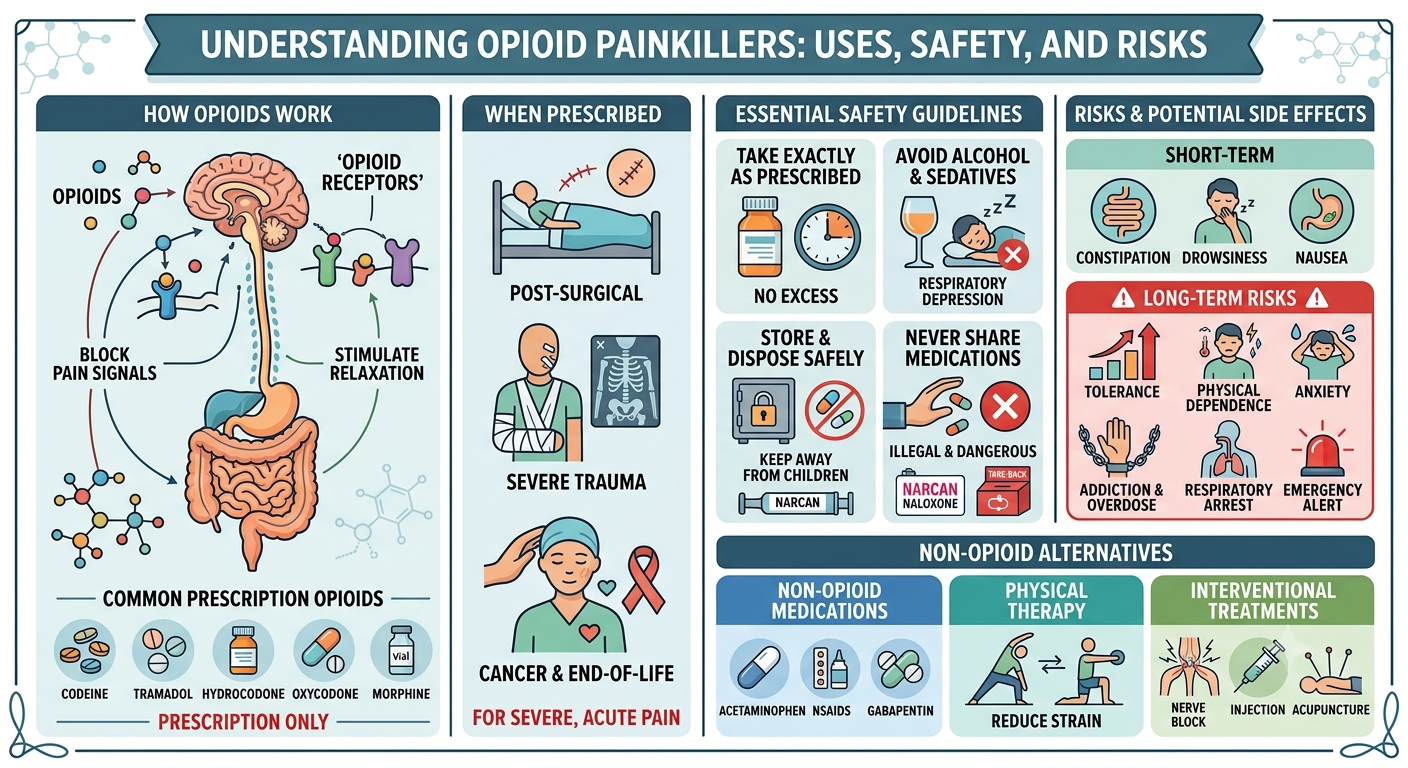
Opioids function by attaching to specific proteins called opioid receptors located in the brain, spinal cord, and gastrointestinal tract. When active, these medications block pain signals traveling from the body to the brain while simultaneously stimulating feelings of relaxation.
Commonly prescribed opioids include:
-
Oxycodone and Hydrocodone: Frequently prescribed for moderate-to-severe post-surgical pain or severe injury recovery.
-
Morphine: Often used in hospital settings for immediate, severe physical trauma or end-of-life palliative care.
-
Codeine and Tramadol: Mild-to-moderate opioids sometimes combined with acetaminophen for short-term pain control.
When Are Opioid Painkillers Prescribed?
Healthcare providers carefully evaluate every situation before prescribing opioids. They are typically reserved for:
-
Post-Surgical Recovery: Managing short-term, acute pain immediately following major operations.
-
Severe Physical Trauma: Controlling intense discomfort resulting from broken bones, burns, or major physical accidents.
-
Cancer and End-of-Life Care: Providing compassionate relief for severe chronic pain related to terminal illnesses.
Essential Safety Guidelines for Use
If your doctor prescribes an opioid, following these safety precautions helps minimize health risks:
-
Take Exactly as Prescribed: Never increase your dosage or take the medicine more frequently than instructed, even if your pain feels worse.
-
Avoid Alcohol and Sedatives: Combining opioid painkillers with alcohol, sleeping pills, or anti-anxiety medications can cause life-threatening respiratory depression (slowed breathing).
-
Store and Dispose Safely: Keep medications in a locked, secure location away from children and guests. Return unused pills to pharmacy take-back programs.
-
Never Share Medications: Prescription opioids are specifically tailored to an individual’s medical profile; sharing them is both illegal and dangerous.
Risks and Potential Side Effects
Short-term side effects include drowsiness, severe constipation, nausea, and brain fog. With prolonged or improper use, significant risks include:
-
Tolerance: Needing higher doses over time to achieve the same level of pain relief.
-
Physical Dependence: Experiencing withdrawal symptoms (sweating, anxiety, abdominal cramps) when stopping the medication abruptly.
-
Addiction and Overdose: Compulsive use despite negative consequences, or severe respiratory depression requiring emergency naloxone (Narcan) treatment.
Non-Opioid Pain Management Alternatives
Doctors often combine or replace opioids with safer alternatives for long-term health:
-
Non-Opioid Medications: Acetaminophen, NSAIDs (like ibuprofen), or targeted nerve medications (such as gabapentin).
-
Physical Therapy: Tailored exercise programs to restore movement and reduce muscle or joint strain.
-
Interventional Treatments: Nerve blocks, corticosteroid injections, or physical acupuncture.