Period Painkillers: Relief for Menstrual Cramps & Dysmenorrhea

Understanding Period Painkillers: Fast Relief for Menstrual Cramps
For millions of women around the world, monthly menstrual cramps (medically known as dysmenorrhea) are an unwelcomed reality. Pain can range from a dull, throbbing ache in the lower abdomen to severe, radiating discomfort that extends into the lower back and thighs. Understanding how period painkillers work in your body—and choosing the most effective medication—can help you manage your symptoms and maintain your daily routine without interruption.
How Period Painkillers Work
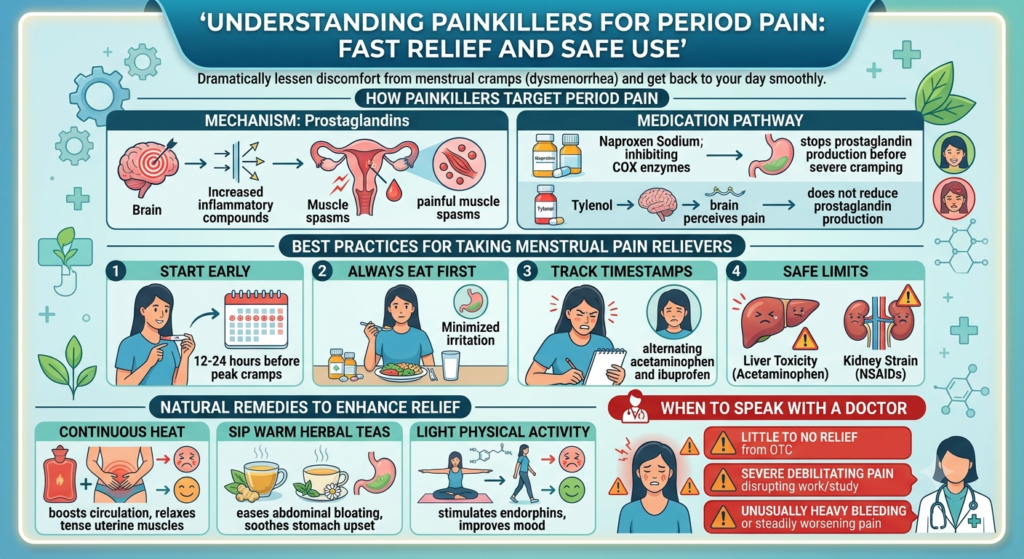
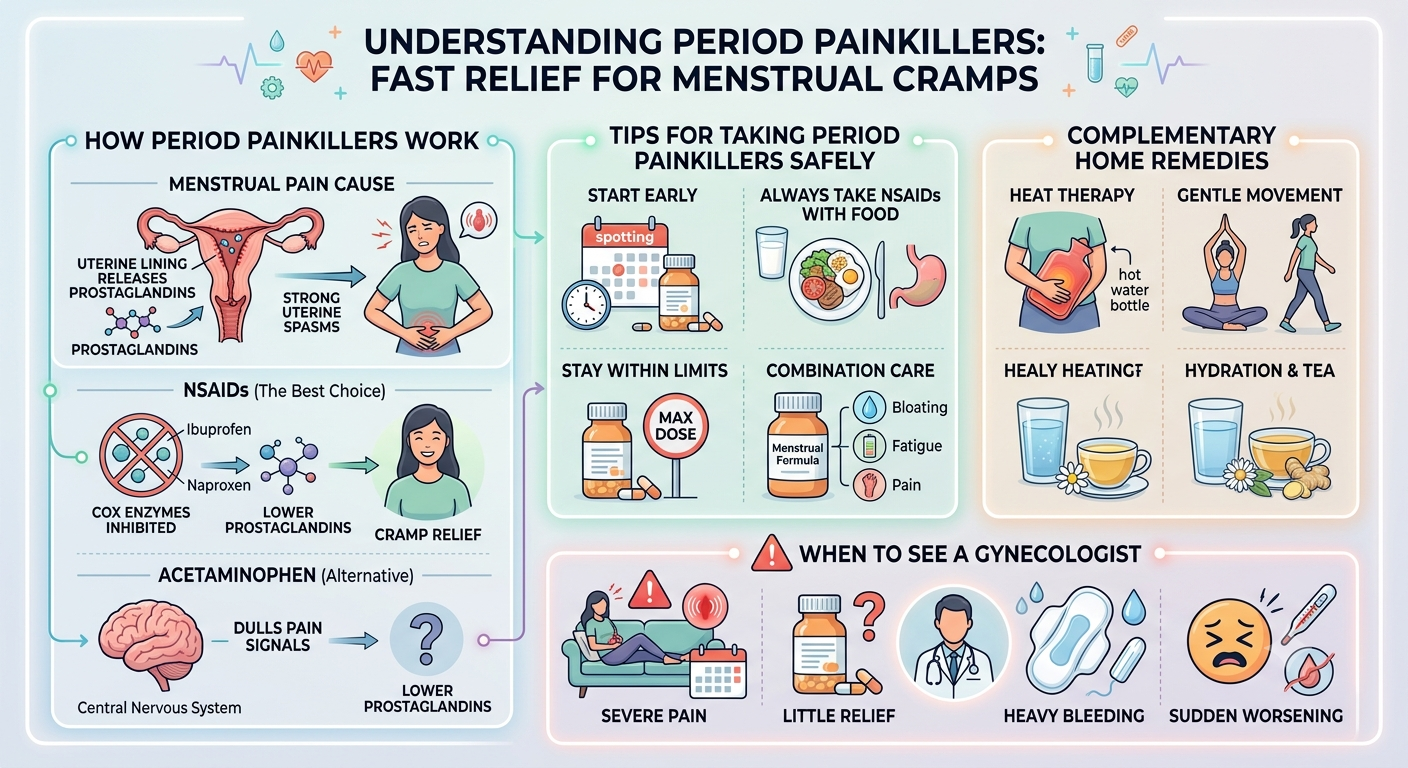
To choose the right pain relief, it helps to understand what causes menstrual pain. During menstruation, the lining of the uterus releases inflammatory chemical messengers called prostaglandins. These chemicals prompt the uterine muscles to contract and shed its lining. Higher levels of prostaglandins trigger stronger, more painful uterine spasms.
-
NSAIDs (The Best Choice for Menstrual Pain): Nonsteroidal Anti-Inflammatory Drugs like ibuprofen (Advil, Motrin) and naproxen sodium (Aleve) target the root cause of period pain by inhibiting the COX enzymes that produce prostaglandins. Starting an NSAID a day before your period begins can prevent peak pain before it starts.
-
Acetaminophen (Tylenol): While acetaminophen acts on the central nervous system to dull pain signals, it does not lower prostaglandin levels or reduce inflammation. It is a good alternative if you have stomach sensitivity or cannot take NSAIDs.
Tips for Taking Period Painkillers Safely
To maximize relief while minimizing side effects, keep these key guidelines in mind:
-
Start Early: Take your chosen period painkillers at the very first sign of spotting or mild cramping rather than waiting until the pain becomes severe.
-
Always Take NSAIDs with Food: Take ibuprofen or naproxen alongside a meal, snack, or glass of milk to protect your stomach lining from irritation.
-
Stay Within Daily Dosage Limits: Never exceed the recommended dose on the packaging or prescribed by your healthcare professional.
-
Consider Combination Care: Some over-the-counter menstrual formulas combine acetaminophen with mild diuretics (like pamabrom) or antihistamines to address bloating and fatigue alongside pain.
Complementary Home Remedies for Cramp Relief
Pairing period painkillers with simple non-medicinal remedies can boost your overall comfort:
-
Heat Therapy: Applying a warm heating pad or hot water bottle to your lower abdomen relaxes contracted uterine muscles as effectively as OTC pain relievers.
-
Gentle Movement: Light stretching, yoga, or a brief walk releases endorphins—your body’s natural, mood-boosting pain relievers.
-
Hydration & Herbal Tea: Drinking warm water or soothing chamomile and ginger tea can help ease digestive bloating and abdominal tension.
When to See a Gynecologist
While mild to moderate cramping is common, severe menstrual pain shouldn’t be ignored. Schedule an appointment with a healthcare provider if:
-
Your pain is so severe that it regularly prevents you from attending work or school.
-
Over-the-counter period painkillers provide little to no relief.
-
You experience heavy bleeding (soaking through a pad or tampon every hour).
-
Your pain suddenly worsens or is accompanied by symptoms like fever or unusual discharge, which may indicate underlying conditions like endometriosis or uterine fibroids.