Painkillers Medicine Guide: Types, Safe Use & Side Effects


Understanding Painkillers Medicine: Types, Safety, and Proper Use
Whether managing a temporary headache, recovering from a sports injury, or coping with a long-term condition, painkillers medicine plays an essential role in modern healthcare. These medications are designed to interrupt or dull pain signals sent to the brain, helping you rest, heal, and maintain daily functioning. However, because different types of pain relievers target distinct pathways in the body, understanding how to choose and use painkillers medicine safely is vital for your long-term health.
The Main Classes of Painkillers Medicine
Pain-relieving medications generally fall into three primary categories based on their mechanism of action and strength:
-
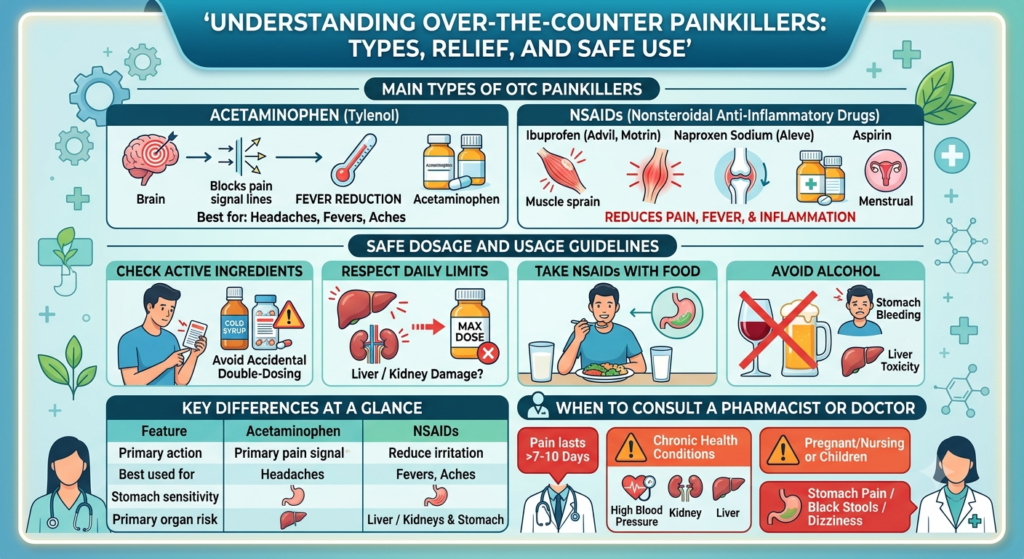
Non-Opioid Analgesics (Acetaminophen): Best known under brand names like Tylenol, acetaminophen acts directly on the central nervous system to reduce pain signals and lower fever. It is ideal for mild-to-moderate aches but does not reduce inflammation.
-
NSAIDs (Nonsteroidal Anti-Inflammatory Drugs): Medications such as ibuprofen, naproxen, and aspirin work by blocking COX enzymes responsible for inflammation. They are exceptionally effective for swelling, arthritis, dental pain, and muscular sprains.
-
Prescription Opioids: Stronger medications—including codeine, oxycodone, and tramadol—are strictly reserved for severe acute pain, such as post-surgical recovery or major trauma. They require careful medical oversight due to risks of tolerance and dependence.
Key Guidelines for Safe Medication Use
To get the best results from your painkillers medicine while preventing dangerous complications, always follow these fundamental safety precautions:
-
Read Labels Carefully: Check active ingredients on all over-the-counter products. Multi-symptom cold or flu medications often contain hidden pain relievers, increasing the risk of accidental overdose.
-
Respect Maximum Daily Doses: Exceeding recommended limits of acetaminophen can cause severe liver damage, while overusing NSAIDs can trigger stomach ulcers or kidney strain.
-
Take NSAIDs with Food: Protect your stomach lining by consuming food or a glass of milk whenever you take ibuprofen or naproxen.
-
Avoid Mixing with Alcohol: Combining pain relievers with alcohol significantly increases the risk of organ damage, internal bleeding, and dangerous sedation.
Comparing Common Painkillers
| Category | Typical Examples | Primary Function | Key Safety Note |
| Acetaminophen | Tylenol | Pain & Fever | Avoid exceeding daily liver limits |
| NSAIDs | Ibuprofen, Naproxen | Pain, Fever & Swelling | Take with food to protect stomach |
| Prescription Opioids | Oxycodone, Tramadol | Severe Acute Pain | Short-term use only under doctor care |
When to Seek Professional Medical Advice
While non-prescription remedies offer fast relief for routine discomfort, consult a doctor or pharmacist if:
-
Your pain persists for longer than 7 to 10 days without clear improvement.
-
You suffer from chronic health conditions such as high blood pressure, liver failure, or kidney disease.
-
You experience adverse reactions like persistent stomach ache, severe dizziness, or skin rashes.