Back Pain Relief Guide: Causes, Treatments & Prevention Tips


Understanding Back Pain: Causes, Relief, and Prevention
Back pain is one of the most common physical ailments globally, affecting millions of people of all ages. Whether it presents as a dull, constant ache or a sudden, sharp sensation, discomfort in the spine can significantly impact your daily productivity, sleep, and overall quality of life. Understanding what triggers back pain and knowing how to address it effectively is the key to regaining comfort and mobility.
Common Causes of Back Pain
The human back is a complex structure made of bones, joints, ligaments, and muscles. Injury, strain, or structural issues can easily disrupt this balance. Some of the most frequent triggers include:
-
Muscle or Ligament Strain: Heavy lifting, sudden awkward movements, or poor athletic form can overstretch spinal muscles and spinal ligaments.
-
Poor Posture: Slouching over a computer desk or phone for extended hours puts unnecessary pressure on the spine.
-
Structural Discomfort: Bulging or ruptured discs, arthritis, and skeletal irregularities (such as scoliosis) frequently lead to persistent back pain.
-
Sedentary Lifestyle: Weak core muscles fail to support the spine properly, leaving the lower back vulnerable to strain during ordinary tasks.
Effective Ways to Relieve Back Pain
Managing discomfort depends on the severity and underlying cause. Here are proven strategies to alleviate symptoms:
1. Heat and Cold Therapy
For acute injuries, apply an ice pack during the first 48 hours to reduce inflammation and numb sharp discomfort. Afterward, switch to heat pads to relax tight muscles and enhance blood circulation.
2. Over-the-Counter Pain Relief
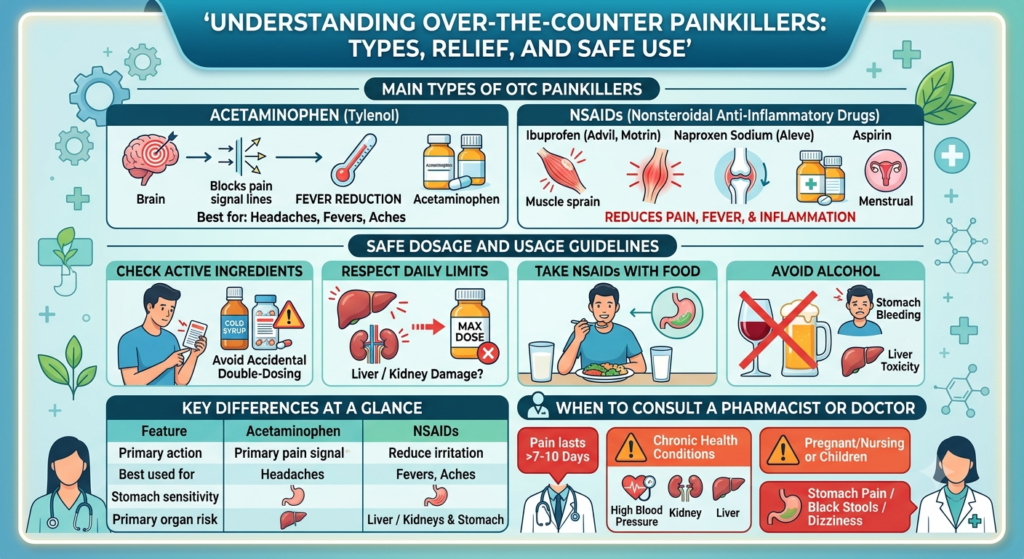
Nonsteroidal anti-inflammatory drugs (NSAIDs) such as ibuprofen or naproxen can help reduce swelling and dull discomfort. Always follow package instructions and consult a doctor if pain persists.
3. Gentle Movement and Stretching
While resting briefly can help after an injury, prolonged bed rest often worsens stiffness. Light walking, yoga, and targeted lower back stretches promote flexibility and speed up recovery.
Daily Prevention Habits for Spinal Health
Preventing recurring back pain involves making small, consistent adjustments to your daily routine:
-
Maintain Good Posture: Sit up straight with your feet flat on the floor, keeping your computer monitor at eye level.
-
Strengthen Your Core: Incorporate exercises that build abdominal and back muscles to create natural structural support for your spine.
-
Lift Correctly: Always bend at the knees—not the waist—and keep heavy objects close to your body when lifting.
-
Invest in Ergonomics: Choose a supportive office chair and a medium-firm mattress to preserve natural spinal alignment while working and sleeping.
When to Consult a Medical Professional
While most instances of back pain resolve with conservative home care within a few weeks, you should seek immediate medical attention if your discomfort:
-
Is severe and does not improve with rest.
-
Spreads down one or both legs, especially below the knee.
-
Is accompanied by numbness, tingling, or weakness in your limbs.
-
Occurs alongside unexplained weight loss or fever.
Conclusion
Experiencing back pain can be frustrating, but taking proactive steps to care for your spine makes a substantial difference. By maintaining proper posture, staying physically active, and using appropriate relief methods early on, you can keep your back strong, flexible, and pain-free.