Leg Pain Relief Guide: Common Causes, Exercises & Care

Understanding Leg Pain: Causes, Relief, and Prevention
Leg pain is a widespread health concern that can range from a mild, dull ache to severe, shooting discomfort that makes walking difficult. Because the legs contain complex networks of muscles, tendons, ligaments, blood vessels, and nerves, discomfort can originate from various physical sources. Whether caused by intense physical exercise, circulatory issues, or nerve pressure, identifying the root cause of your leg pain is the first step toward effective relief.
Common Causes of Leg Pain
Understanding where and how your legs hurt can help narrow down potential causes:
-
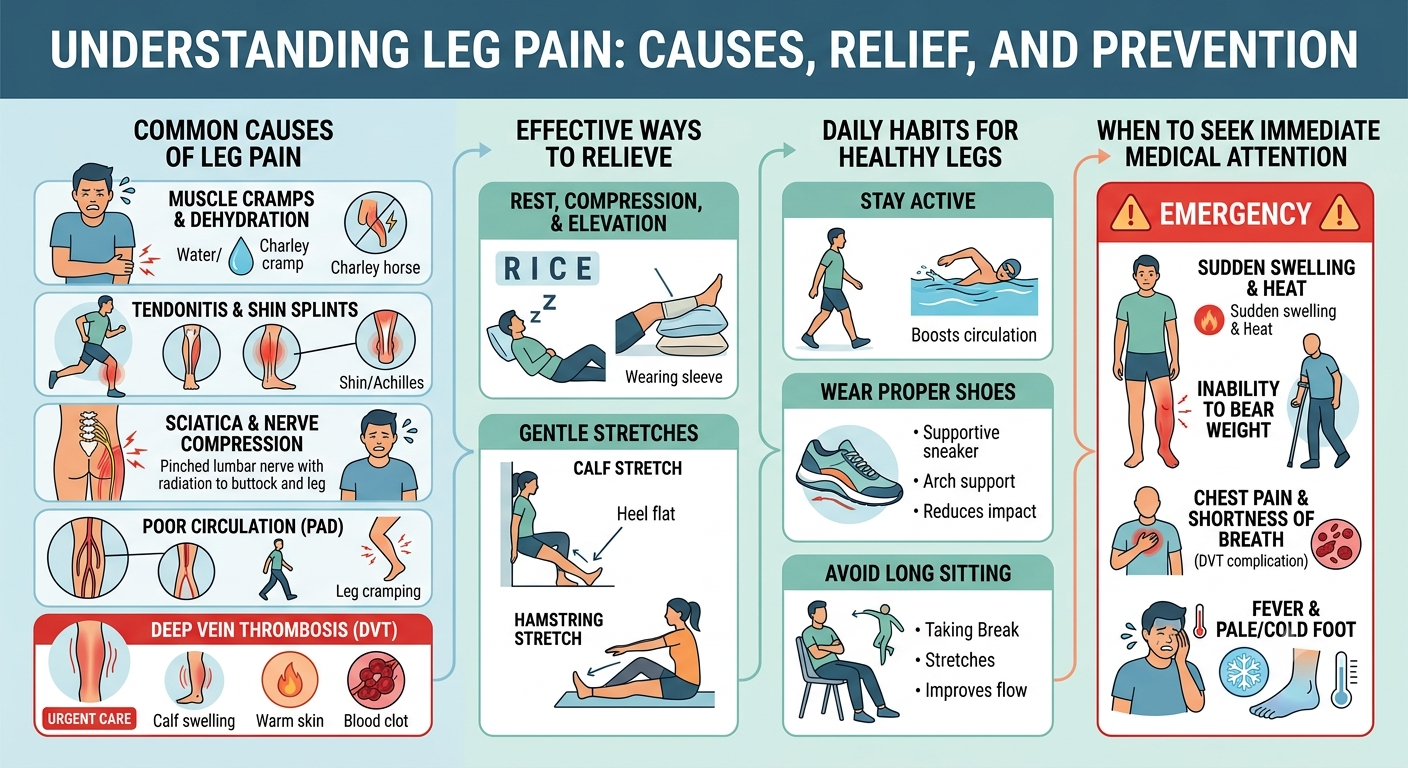
Muscle Cramps and Dehydration: Sudden, involuntary muscle contractions (often called “charley horses”) frequently occur due to muscle fatigue, dehydration, or an imbalance in electrolytes like potassium and magnesium.
-
Tendonitis and Shin Splints: Repetitive impact from running or jumping can cause inflammation in the tendons or connective tissues along the shinbone.
-
Sciatica and Nerve Compression: A pinched nerve in the lower spine can send sharp, shooting discomfort or tingling feelings radiating down through the buttock and leg.
-
Poor Circulation (Vascular Issues): Conditions like peripheral artery disease (PAD) reduce blood flow to the limbs, causing leg cramping or fatigue during physical activity that improves with rest.
-
Deep Vein Thrombosis (DVT): A blood clot in a deep vein—often in the calf—can cause persistent swelling, warmth, and throbbing discomfort, requiring urgent care.
Effective Ways to Relieve Leg Discomfort
For non-emergency, mild leg pain, these home care strategies can help soothe your limbs and speed up recovery:
1. Rest, Compression, and Elevation
If your discomfort stems from muscle strain or overuse, rest the leg and avoid heavy impact. Elevate your leg on pillows above heart level to reduce fluid swelling, and consider mild compression socks to support healthy circulation.
2. Gentle Calf and Hamstring Stretches
-
Calf Stretch: Stand facing a wall, extend one leg behind you with the heel flat on the floor, and lean forward gently until you feel a pull in your calf. Hold for 20 to 30 seconds.
-
Hamstring Stretch: Sit on the floor with one leg extended, gently reach toward your toes while keeping your spine straight, and hold briefly.
3. Hydration and Electrolyte Care
Drink plenty of water throughout the day to keep muscles properly hydrated. If you suffer from frequent night cramps, balance your intake of sodium, potassium, and magnesium.
Daily Habits for Healthy Legs
Protecting your legs from recurring soreness involves adopting daily preventative habits:
-
Stay Active: Regular, low-impact exercise like walking or swimming boosts circulation and strengthens leg muscles.
-
Wear Proper Shoes: Supportive footwear reduces impact forces on your knees, shins, and ankles.
-
Avoid Long Periods of Sitting: Stand up and move around every hour to keep blood flowing steadily through your lower limbs.
When to Seek Immediate Medical Attention
While many muscle aches heal with care, seek immediate emergency care if you experience:
-
Sudden swelling, severe heat, or redness in one leg.
-
Inability to bear weight on the affected leg.
-
Pain accompanied by shortness of breath or chest pain (signs of a potential blood clot complication).
-
Leg discomfort accompanied by fever or a pale, cold foot.