
Knee Pain Relief: Common Causes, Home Care & Prevention

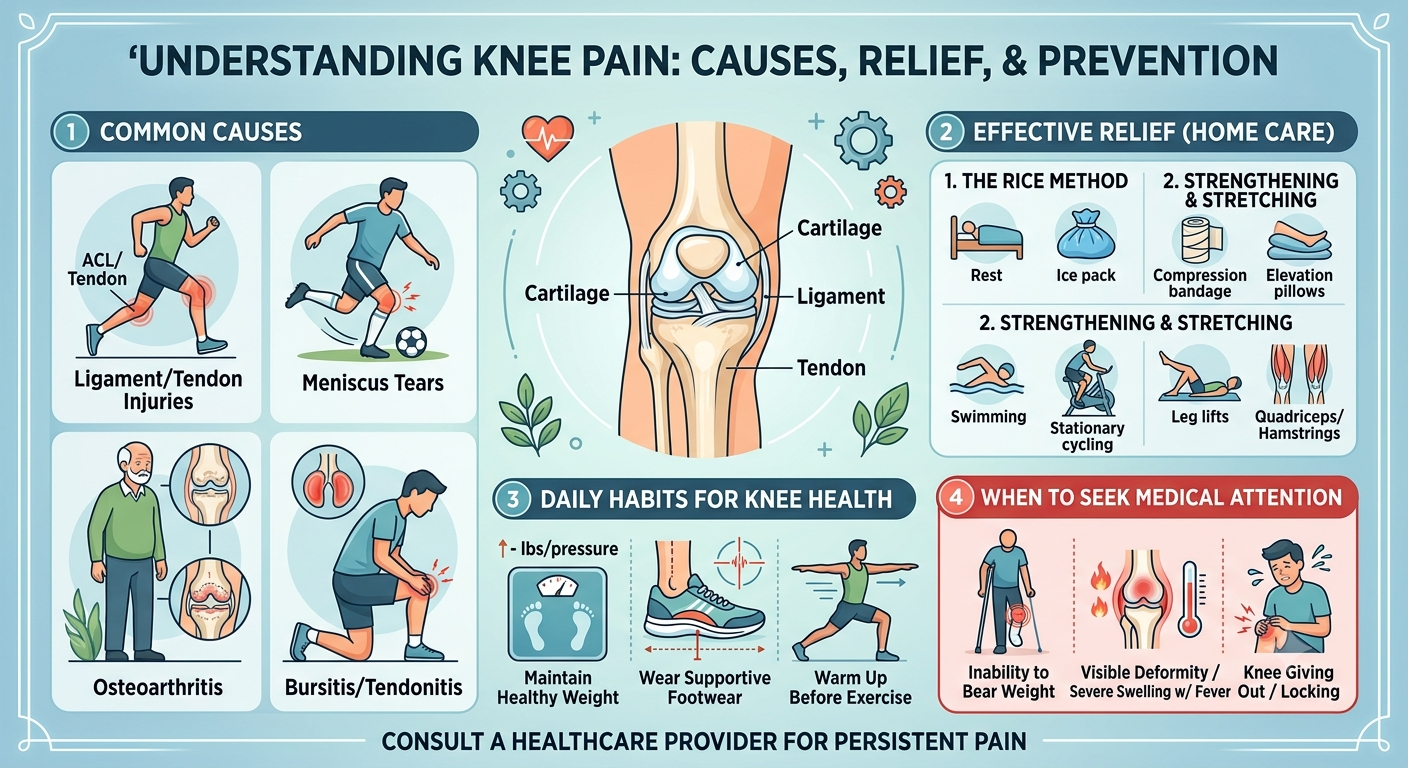
Understanding Knee Pain: Causes, Relief, and Prevention
Knee pain is a widespread issue that affects people of all ages, from active athletes to older adults. As one of the largest and most complex joints in the body, the knee bears significant weight during daily movements such as walking, climbing stairs, and bending. Whether caused by a sudden sports injury or gradual wear over time, addressing discomfort early is essential for maintaining mobility and preventing long-term joint damage.
Common Causes of Knee Pain
The knee joint connects the thigh bone to the shin bone, supported by cartilage, ligaments, and tendons. Discomfort can arise when any of these structures become damaged or inflamed:
-
Ligament and Tendon Injuries: High-impact activities or sudden twists can strain or tear key support structures, such as the anterior cruciate ligament (ACL) or patellar tendon.
-
Meniscus Tears: The tough, rubbery cartilage that acts as a shock absorber can tear during abrupt pivots or heavy lifting, causing swelling and catching sensations.
-
Osteoarthritis: Often referred to as wear-and-tear arthritis, this condition involves the gradual breakdown of joint cartilage, leading to stiffness and persistent friction.
-
Bursitis and Tendonitis: Overuse from repetitive motions, like jumping or kneeling, can cause inflammation in the fluid-filled sacs (bursae) or tendons around the joint.
Effective Ways to Relieve Knee Discomfort
For mild to moderate knee pain, conservative home care strategies can help reduce inflammation and restore comfort:
1. The RICE Method
-
Rest: Limit weight-bearing activities to allow inflamed tissues time to heal.
-
Ice: Apply a cold pack wrapped in a towel for 15 to 20 minutes several times a day to numb sharp discomfort and decrease swelling.
-
Compression: Wear a breathable elastic bandage to support the joint and manage fluid buildup.
-
Elevation: Prop your leg up on pillows above heart level while resting to facilitate drainage and minimize inflammation.
2. Gentle Strengthening and Stretching
Low-impact exercises, such as swimming, stationary cycling, or leg lifts, help strengthen the quadriceps and hamstrings. Strong surrounding muscles absorb impact and reduce stress on the knee joint itself.
Daily Habits for Knee Health
Protecting your knees from recurring discomfort involves making small, proactive adjustments:
-
Maintain a Healthy Weight: Every extra pound of body weight exerts roughly four pounds of additional pressure on your knees when walking.
-
Wear Supportive Footwear: Choose shoes with proper arch support and cushioning to maintain proper alignment from the feet up to the hips.
-
Warm Up Before Exercise: Prepare your joints with dynamic stretches before engaging in strenuous physical activity.
When to Seek Immediate Medical Attention
While many cases improve with self-care, consult a healthcare provider promptly if you experience:
-
Inability to bear weight on the affected leg.
-
Visible joint deformity or severe swelling accompanied by fever.
-
A feeling that the knee is giving out or locking completely in place.


